Learn Chemistry the Simple Way

Clear explanations of chemical tests, reactions, mechanisms, and laboratory techniques designed for students.
Explore Chemical Tests Start Learning
A clean, high-key laboratory setup featuring beakers, a funnel, and a glass pipette with a soft purple and gray color grade, emphasizing a professional scientific environment.

Chemical Test Categories

Explore our comprehensive guide to chemistry lab tests and organic chemistry reactions organized by functional groups.
Carbohydrate Tests

Includes Benedict Test, Molisch Test, Fehling Test

Learn qualitative tests for detecting carbohydrates and reducing sugars in chemistry lab.

Learn more

Aldehyde and Ketone Tests

Includes Tollens Test and Fehling Test

Understand chemistry tests for aldehydes including the silver mirror reaction and Fehling solution test.

Learn more

Phenol Tests

Includes Ferric Chloride Test

Study organic chemistry tests for identifying phenols using ferric chloride test procedures.

Learn more

Unsaturation Tests

Includes Baeyer Test, Bromine Water Test

Master chemistry lab tests for unsaturation and double bonds using the Baeyer and Bromine water test method.

Learn more

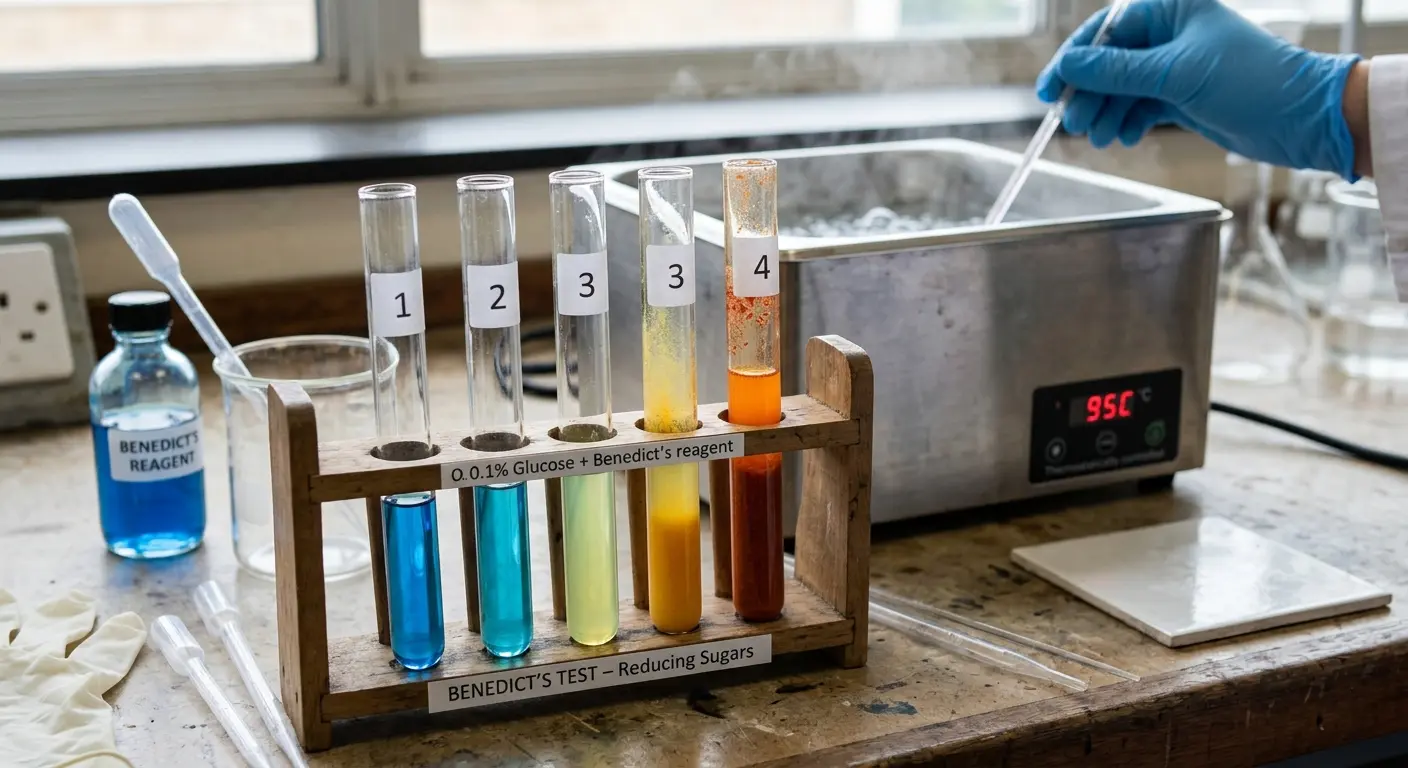
Five test tubes in a rack showing Benedict's test colors: blue, green, yellow, orange, and brick-red, with a bottle labeled "Benedict's Reagent" visible on the lab bench.

Benedict Test for Reducing Sugars

Complete guide to Benedict test procedure for detecting reducing sugars in carbohydrates with step-by-step chemistry lab instructions.
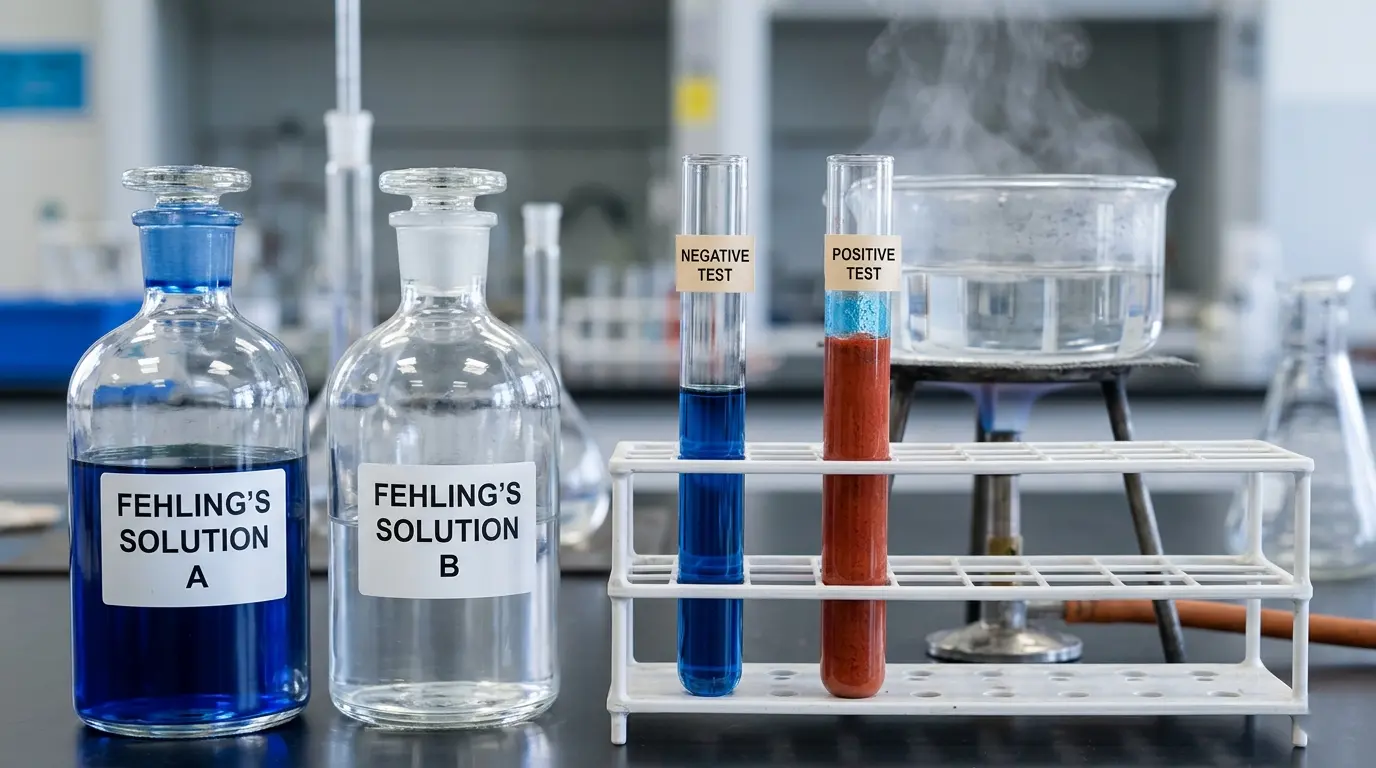
A chemistry laboratory setup showing Fehling’s Test. On the left are two glass reagent bottles labeled "Fehling's Solution A" (blue liquid) and "Fehling's Solution B" (clear liquid). In a white test tube rack, two tubes show the results: a "Negative Test" tube containing a deep blue solution and a "Positive Test" tube containing a thick brick-red precipitate.

Fehling Solution Test Explained

Learn how Fehling test works in organic chemistry to identify aldehydes and reducing sugars through chemical reactions.

A chemistry laboratory setup showing Fehling’s Test. On the left are two glass reagent bottles labeled "Fehling's Solution A" (blue liquid) and "Fehling's Solution B" (clear liquid). In a white test tube rack, two tubes show the results: a "Negative Test" tube containing a deep blue solution and a "Positive Test" tube containing a thick brick-red precipitate.

Tollens Test Silver Mirror Reaction

Understanding the Tollens test for aldehydes – the famous silver mirror reaction used in qualitative chemistry tests.